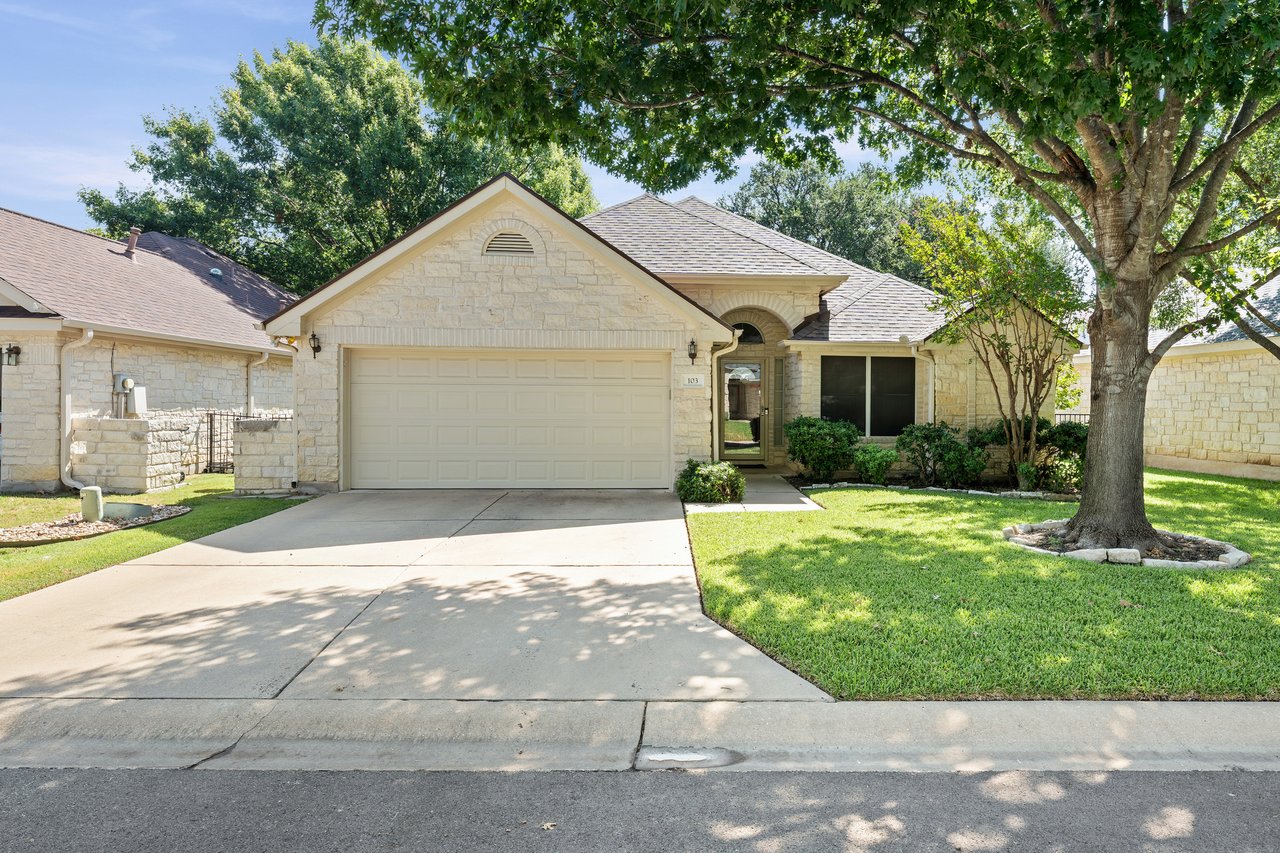
Is a New Construction Home in Temple a Better Deal Than a Resale Home Right Now if the Builder Is Offering a Rate Buydown?
A Temple, TX new construction home can beat a resale when builder incentives meaningfully reduce your financing and closing costs—but the advertised mortgage rate alone doesn't tell you which home is the better deal.
If you're shopping for a home in Temple, Texas right now, you may run into an offer that's hard to ignore:
A brand-new home paired with a mortgage rate well below what you're seeing elsewhere.
For a first-time homebuyer or someone relocating to Central Texas, that can immediately make new construction look like the obvious winner over a resale home.
But is it?
Maybe.
The mistake is comparing the builder's advertised rate to the resale home's price and stopping there.
To know which home is actually the better deal, you need to compare the financing, closing costs, taxes, insurance, repairs, warranties, incentives, location, and long-term payment—not just the number on the builder's sign.
Mortgage rates make this comparison particularly relevant right now.
According to Freddie Mac's Primary Mortgage Market Survey, the average 30-year fixed mortgage rate was 6.76% as of September 10, 2026.
Even relatively small changes in your mortgage rate can change your monthly principal-and-interest payment and your purchasing power.
That's why a builder offering financing incentives can get your attention quickly.
But there's an important distinction:
The national average mortgage rate isn't necessarily the rate you'll receive, and a builder's advertised rate isn't necessarily available to every buyer.
Your actual rate depends on your loan program, credit profile, down payment, lender, discount points, qualifications, and other factors.
So before deciding that a new home is cheaper, find out exactly what is behind the advertised number.
A mortgage rate buydown generally involves paying an upfront cost to reduce the borrower's interest rate.
But not all buydowns work the same way.
A temporary buydown reduces the effective payment rate for an initial period.
For example, a structure might provide a larger reduction during year one, a smaller reduction during year two, and then return to the full note rate.
That lower first-year payment can be appealing.
However, you need to know what your payment becomes after the temporary benefit ends.
With a permanent buydown, discount points or another financing structure may be used to secure a lower interest rate for the life of the loan.
That can have a very different long-term value than a temporary incentive.
When you're touring new construction in Temple or Belton, don't ask only:
"What's the rate?"
Ask:
"Is that rate temporary or permanent, and what does it cost to get it?"
When we help buyers compare homes, the goal is to get past the marketing and make the comparison as close to apples-to-apples as possible.
Here are seven numbers worth putting side by side.
Compare | New Construction | Resale |
|---|---|---|
Purchase price | Builder's negotiated price | Seller's negotiated price |
Interest rate | Incentive/preferred-lender rate | Your available market rate |
Cash to close | Down payment + closing costs | Down payment + closing costs |
Monthly payment | At full long-term payment | At expected loan payment |
Property taxes | Estimate carefully | Review existing tax information |
Insurance | Quote the actual property | Quote the actual property |
Near-term expenses | Blinds, landscaping, upgrades, etc. | Repairs, replacements, updates, etc. |
Now let's look at why those differences matter.
A lower mortgage rate doesn't automatically compensate for a higher purchase price.
Suppose you're considering a new construction home and a resale home with similar square footage and features.
The builder may offer an attractive financing package, while the resale seller may be more flexible on price.
Neither is automatically better.
You need to calculate what you're actually paying for the property and what you're financing.
This is especially relevant in the current Temple housing market.
Redfin reports that over the three months ending August 2026, the median Temple sale price was approximately $262,077, down 3.4% year over year. Homes sold for an average of about 98.1% of their final list price.
That doesn't mean every seller will negotiate. It does tell you that resale buyers shouldn't assume the asking price is necessarily the final number.
This is where an advertised builder rate can look particularly powerful.
But don't compare:
Builder's promotional payment vs. resale payment
unless both numbers represent the same thing.
If the builder incentive is temporary, ask your lender to show you the payment once the temporary buydown expires.
You should understand:
As a first-time buyer, you don't want to choose a home because year-one payments work for your budget only to discover that the later payment is uncomfortable.
This is one area where new construction can become especially competitive.
A builder may offer some combination of:
But there may be conditions.
For example, an incentive could require you to use a builder's preferred lender or title provider. Availability can also depend on the specific home, contract date, closing deadline, loan type, or buyer qualifications.
A resale seller may also be willing to negotiate concessions depending on the property and transaction.
That's why you should compare the net financial package, not simply ask which side is offering an incentive.
This is especially important if you're relocating to Temple or Belton from another state.
A lender's initial payment estimate is not the same thing as your guaranteed future housing expense.
With new construction, estimating property taxes can require extra care because the property's previous tax information may not reflect the completed home's full value.
Ask your lender, tax professional, and real estate agent what assumptions are being used.
If one payment estimate assumes taxes based on incomplete construction while another reflects a completed home, you don't have a fair comparison.
For a relocation buyer unfamiliar with Texas property taxes, this can be one of the most important numbers to understand before closing.
New doesn't always mean "nothing else to buy."
Depending on the home and builder, you may still need to budget for things such as:
A resale home can have the opposite situation.
It may already include many of those items but have an older HVAC system, roof, water heater, appliances, flooring, or other components you'll eventually need to repair or replace.
The right question isn't:
"Which house needs less work?"
It's:
"What am I likely to spend during my first few years of ownership?"
One advantage of new construction can be builder and manufacturer warranty coverage.
But "new" should never mean "don't inspect."
An independent inspection can identify issues before closing or during applicable warranty periods.
With a resale home, your inspection serves a somewhat different purpose. You're evaluating the condition of existing systems and identifying potential repairs or maintenance.
For either home, you want to understand what you're buying—not simply whether someone else has lived there before.
This is where buyers can get so focused on incentives that they lose sight of the bigger decision.
A financing incentive lasts for a defined period—or affects financing under defined terms.
You live in the location every day.
If you're relocating to Temple or Belton, consider:
A beautiful new home with a compelling rate isn't necessarily the better purchase if another property fits your life significantly better.
Sometimes, absolutely.
But it depends on the numbers.
A new construction home may have the advantage when the builder's financing and closing-cost incentives create meaningful savings, the home fits your needs, and you value having newer systems and available warranty coverage.
A resale home may come out ahead when you negotiate a better purchase price or concessions, get more home or land for your budget, inherit valuable improvements, or find a substantially better location.
And sometimes the answer isn't obvious until you put both homes into the same comparison.
That's why we don't recommend choosing based on an advertised interest rate alone.
Imagine you're comparing two properties:
Home A: New construction with a builder financing incentive.
Home B: Resale with no advertised mortgage incentive.
At first glance, Home A may seem cheaper because the advertised interest rate is lower.
But then you discover Home B's seller is willing to negotiate on price and contribute toward allowable closing costs. The resale also already has window coverings, mature landscaping, a refrigerator, and fencing.
Or the opposite could happen.
After comparing the numbers, the builder's permanent rate incentive and closing-cost contribution may produce enough savings that the new construction home clearly wins for your situation.
That's why the calculation has to happen before the decision—not after.
If you walk into a builder's model home, remember that the builder's sales representative represents the builder's interests.
You can have your own real estate agent helping you evaluate the transaction.
A local first time homebuyer specialist or relocation specialist can help you compare new construction against resale options throughout Temple and Belton rather than evaluating the builder's home in isolation.
Your agent can also help you ask questions about:
The objective isn't to talk you out of new construction.
It's to help you determine whether the incentive you're being offered actually makes that home the better choice for you.
It depends. New construction may include financing or closing-cost incentives, while resale homes may offer opportunities to negotiate price, concessions, or repairs. Compare total cash to close, monthly housing expense, taxes, insurance, and anticipated ownership costs—not just list prices.
You can evaluate the builder's preferred lender, especially when incentives are attached, but understand the complete loan terms and compare your options. Freddie Mac specifically encourages buyers to shop around because differences in mortgage rates can translate into meaningful savings.
You aren't required to use one, but having your own agent can give you someone focused on helping you evaluate the builder's offering against other new construction and resale options. Builder representation and buyer representation serve different interests.
If you're deciding between a new construction and resale home in Temple, Texas, don't let one advertised mortgage rate make the decision for you.
Put the options side by side.
Compare the price. Compare the full loan terms. Compare your cash to close. Compare property taxes and insurance. Look at what you'll need to spend after moving in. Then compare the neighborhoods and the homes themselves.
That's when you'll know which "deal" is actually better.
Home in Texas Team helps first-time homebuyers and families relocating from out of state compare new construction and resale opportunities throughout Temple, Belton, and the surrounding Central Texas area.
As a mother-daughter run real estate team, Ali Thompson and McKenna Taggart understand that relocating to Texas—or purchasing your first home—comes with questions that go well beyond finding a house online.
If you're looking for a first time homebuyer specialist in Temple, Texas, a relocation specialist in Temple or Belton, or simply someone who will help you compare the real numbers before you buy, reach out to the Home in Texas Team.
Ali Thompson & McKenna Taggart
Home in Texas Team | Temple & Belton, Texas
Mother-Daughter Real Estate Team • Relocation • First-Time Buyers • New Construction
How to Compare Builder Rate Buydowns, Closing Costs, Monthly Payments, and Resale Homes Before You Buy

What to Do When Your Temple or Belton Luxury Home Has Been on the Market for 60+ Days

Why first-time buyers searching north of Austin should compare Jarrell with Temple and Belton before choosing a new-construction community.

Why Central Texas buyers looking at Georgetown should consider Temple for new construction, purchasing power, amenities, and everyday lifestyle.
A practical comparison of Temple, Belton, Killeen, Harker Heights and Copperas Cove for buyers relocating to Fort Hood.

Explore Deerfield and discover what custom-home living can look like for buyers relocating to Temple, TX.

Thinking about living in Temple or Belton while working in Austin? Compare home prices, commute times, lifestyle, and the tradeoffs versus Georgetown, Round Rock, and … Read more

Explore Mesa Ridge, Carothers Executive Homes, Belton ISD, and why this Temple, Texas neighborhood is getting attention from local and relocation buyers.

A Military Family’s Guide to Comparing Commutes, Homes, New Construction, and Communities Near Fort Hood
Through my business, my involvement in our community, and my dedication to my clients, I have developed a great network of friends and business associates. If you need something, I’ll be able to help….and that’s what I love doing!

Ali L. Thompson
McKenna Taggart
Address
6270 W ADAMS AVE
TEMPLE TX 76502