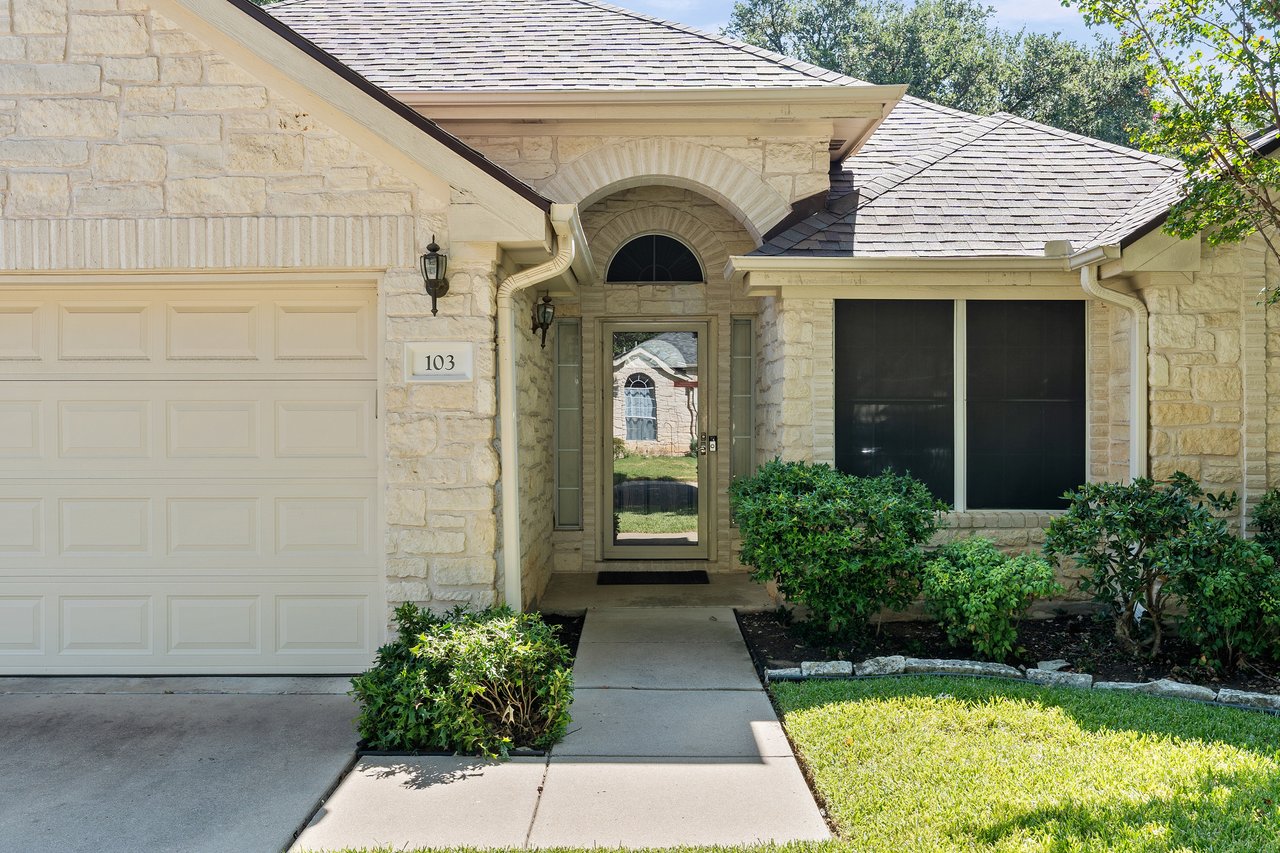
Can You Buy a Temple or Belton Home Remotely Without Flying to Texas?
Yes. Many parts of a Temple or Belton home purchase can be handled remotely, including virtual tours, inspections, document signing, and—in some transactions—closing. Your lender, title company, and agent should confirm what your specific transaction allows.
If you're relocating to Central Texas from another state, one of the first logistical questions you may have is surprisingly simple:
How many times do I actually have to fly to Texas to buy a house?
Sometimes, the answer can be zero.
That doesn't mean you should buy a home casually from your laptop. It means that with the right process, technology, local representation, and due diligence, you can make a well-informed home purchase even when you're hundreds or thousands of miles away.
For buyers relocating to Temple or Belton, this can be especially helpful if you're starting a new job, coordinating a military move to Fort Hood, selling a home in another state, or trying to move your family without taking multiple house-hunting trips.
Here's what the remote-buying process can actually look like.
The best remote home search doesn't begin with a FaceTime tour.
It begins by narrowing down where you actually want to live.
Temple and Belton may look close together on a map, but your preferred location can change depending on where you'll work, the type of home you want, your budget, school-district boundaries, access to I-35, proximity to Lake Belton or Stillhouse Hollow Lake, and whether you're considering newer subdivisions, established neighborhoods, acreage, or luxury property.
Before spending an entire weekend driving from house to house, you can narrow the search substantially.
For example, tell your relocation specialist:
This is where a local Temple Texas relocation specialist becomes much more useful than simply sending you automated listing alerts.
The goal isn't to show you every house.
It's to eliminate the houses that don't make sense for your move.
A remote showing should not feel like watching a listing video.
Listing photos are designed to make a property look its best. A useful virtual showing should help you understand what the listing photos don't tell you.
When we're helping an out-of-state buyer evaluate a property, the useful details can include things like:
If you're considering a luxury property, acreage home, or custom home, the virtual tour may need to go even deeper.
You might want to see the driveway approach, fencing, outbuildings, pool equipment, guest quarters, landscaping, outdoor living areas, views, utility infrastructure, and the relationship between the home and neighboring properties.
A good remote showing should help you eliminate a home just as confidently as it helps you fall in love with one.
Buying remotely does not mean skipping normal due diligence.
If anything, due diligence becomes more important because you haven't spent as much time physically inside the property.
Depending on the home, that may include a general home inspection plus specialized evaluations involving:
Which inspections make sense depends on the property.
An older Temple home may raise different questions than a newer Belton subdivision home.
A Bell County acreage property with a septic system and private well requires different due diligence from a conventional subdivision property.
A Lake Belton-area home may raise different questions again.
Your inspection strategy should follow the property, not a generic checklist.
Often, yes.
Talk with your inspector about what options they offer. You may be able to receive a detailed digital report with photographs and then have a phone or video conversation to review important findings.
Your agent can also help you understand which items may warrant further investigation or discussion during the applicable contractual period.
Remember that your real estate agent isn't the home inspector and shouldn't pretend to be one.
The inspector's job is to evaluate the property's condition within the scope of the inspection.
Your agent's job is to help you navigate the real estate transaction.
Those roles work together, but they aren't interchangeable.
Texas may handle parts of the purchase process differently from the state you're leaving.
That's one reason you shouldn't assume that terminology or practices from your previous state apply here.
You may encounter terms involving:
Ask questions before signing something you don't understand.
Texas also uses written buyer-representation agreements. The Texas Real Estate Commission describes a representation agreement as a private contract between a broker and a buyer or seller, and current industry rules also affect written buyer agreements and compensation disclosures.
For an out-of-state buyer, it's especially important to understand how your representation works before you're trying to make an offer on a house you just toured virtually.
Talk to your lender early and tell them you're purchasing from out of state.
Don't wait until the week of closing to ask whether a particular signing arrangement is acceptable.
Your lender can explain its requirements for:
If you're changing jobs as part of the relocation, discuss that early too.
A relocation involving new employment can affect documentation and underwriting, so your lender needs an accurate picture of your situation.
Texas permits online notarization. The Texas Secretary of State provides official information governing Texas online notaries and remote online notarization.
But that does not mean every transaction automatically qualifies for a completely online closing.
Your actual closing options can depend on factors including your lender, title company, documents involved, and circumstances of the transaction.
That's why the correct question isn't:
"Does Texas allow remote closings?"
It's:
"What remote-closing options are available for my specific purchase?"
Ask that question early.
Depending on the transaction, your title and lending professionals can explain which documents can be electronically signed, which may require notarization, and whether you'll need to make arrangements for any documents to be signed physically.
This is another moment where a local agent becomes particularly important.
A final walk-through is your opportunity to confirm the property's condition shortly before closing according to the circumstances of your transaction.
If you're still out of state, talk with your agent about how that can be handled.
A remote walk-through might include checking that:
Again, this isn't another home inspection.
It's a final check before ownership changes hands.
Remote buying is convenient, but convenience shouldn't become carelessness.
Wide-angle photography can make spaces feel larger. Carefully selected angles can hide nearby roads, neighboring structures, slopes, or other factors.
That's why live video is useful.
A beautiful house doesn't fix the wrong commute.
Before buying, understand where the property sits relative to the places you'll actually go.
That may include Temple's major employers, Baylor Scott & White, Fort Hood, schools, shopping, I-35, recreation, or family.
Verify information that matters to you.
That could include school assignments, property taxes, flood information, HOA restrictions, internet availability, utilities, or acreage systems.
Your agent can point things out and ask questions, but you should still use qualified professionals for inspections and specialized evaluations.
Ask your lender and title company about your closing options early.
"Remote purchase" and "sight unseen" aren't necessarily the same thing.
You can see a tremendous amount through live video.
You can ask your agent to revisit a property.
You can receive inspection reports.
You can review maps, disclosures, surveys, title documents, tax information, HOA information, and other records.
You can have specialized professionals evaluate important systems.
The goal isn't to recreate the experience of standing in the living room.
The goal is to gather enough reliable information to make the decision that's right for you.
Some buyers will still feel much more comfortable visiting in person before purchasing—and that's completely reasonable.
Others have relocation timelines that make a remote purchase far more practical.
If you're moving because of a military assignment at Fort Hood, timing can be tight.
You may be coordinating orders, reporting dates, household goods, temporary housing, a spouse's job, children, pets, and a home search simultaneously.
A remote-first process can help you narrow the search before you arrive—or, when appropriate, complete much of the purchase from your current location.
Location becomes particularly important for Fort Hood households because some buyers are balancing two different commutes.
One person may need access to Fort Hood while another works in Temple, Belton, healthcare, education, or another Central Texas employment center.
That's not a search that should begin with:
"Show me houses under $500,000."
It should begin with:
"Show me the locations that make our daily life work."
Then we find the house.
Luxury buyers often have an additional challenge: fewer properties may meet their requirements.
If you're looking for acreage, custom construction, lake-area property, a pool, a guest house, substantial garage space, or a particular level of finish, waiting until your next trip to Texas can mean missing a property that fits.
A remote showing allows you to decide whether a property deserves serious consideration without immediately booking a flight.
And because luxury properties can be more unique, we can spend more time showing you the things that standardized listing photography doesn't communicate well.
Before making an offer from another state, make sure you've addressed the questions that matter to your household:
If you can answer those confidently, you're doing much more than simply buying a house from your phone.
You're creating a remote purchase process.
Yes, buyers can make offers after evaluating properties remotely. Whether that's appropriate for you depends on your comfort level and circumstances. Live video tours, inspections, property records, disclosures, and other due diligence can help you evaluate the property from out of state.
Potentially. Texas permits remote online notarization, but your available closing method depends on the requirements of your lender, title company, and specific transaction. Confirm your options early rather than assuming the entire closing can be completed online.
A knowledgeable local agent can be especially valuable when you aren't physically present because you need someone who can show properties live, help you understand locations, coordinate access, communicate with the other professionals involved, and guide you through the local transaction process.
You don't necessarily need to spend every weekend flying back and forth to Central Texas to find a home.
What you do need is a process you trust.
We're Ali Thompson and McKenna Taggart with the Home in Texas Team, a mother-daughter run real estate team serving Temple, Belton, and surrounding Central Texas communities.
As Temple and Belton relocation specialists, we help out-of-state buyers understand much more than what's inside the four walls of a listing. We can help you compare locations, evaluate homes remotely, understand local considerations, and coordinate the home-search side of your move.
Whether you're relocating for Baylor Scott & White, moving to Fort Hood, coming to Central Texas for work, or simply choosing Texas as your next home, we're here to help make the transition easier.
Home in Texas Team | Ali Thompson & McKenna Taggart
Temple & Belton, Texas
Relocation • Luxury Real Estate • First-Time Homebuyers
How out-of-state buyers can tour homes, complete inspections, sign documents, and close on a Temple or Belton home without making repeated trips to Texas.

What Temple and Belton Home Sellers Need to Know About Negotiable Commissions, Buyer Affordability, and Protecting Their Net Proceeds
A First-Time Buyer's Guide to Down Payments, Closing Costs, Earnest Money, and the Cash You'll Actually Need in 2026
A Relocation Guide to Buying Before Selling, Bridge Loans, Contingent Offers, and Coordinating Closings Across State Lines
A Move-Up Buyer's Guide to Coordinating Two Closings, Using Your Home Equity, and Avoiding a Double Move
January vs. Spring 2027: Comparing Buyer Demand, Competition, and Market Conditions to Help Temple and Belton Luxury Homeowners Decide When to Sell

Why November and December Could Give Temple and Belton Homebuyers More Negotiating Power in 2026

What relocating homebuyers should know about Central Texas school ratings, campus differences, and choosing where to buy.
Leaving Fort Hood? Discover Whether Selling or Renting Your Killeen Home Makes Sense—and Why Temple, Belton, or Salado Could Be Your Next Move.
Through my business, my involvement in our community, and my dedication to my clients, I have developed a great network of friends and business associates. If you need something, I’ll be able to help….and that’s what I love doing!

Ali L. Thompson
McKenna Taggart
Address
6270 W ADAMS AVE
TEMPLE TX 76502